
A collector car can spend more time parked than driven. That is not a problem by itself. The risk comes from what happens while the vehicle is sitting: battery discharge, tire deformation, humidity, dust, heat, leaks that go unnoticed, stale fuel concerns, and small mechanical issues that become expensive because nobody was watching.
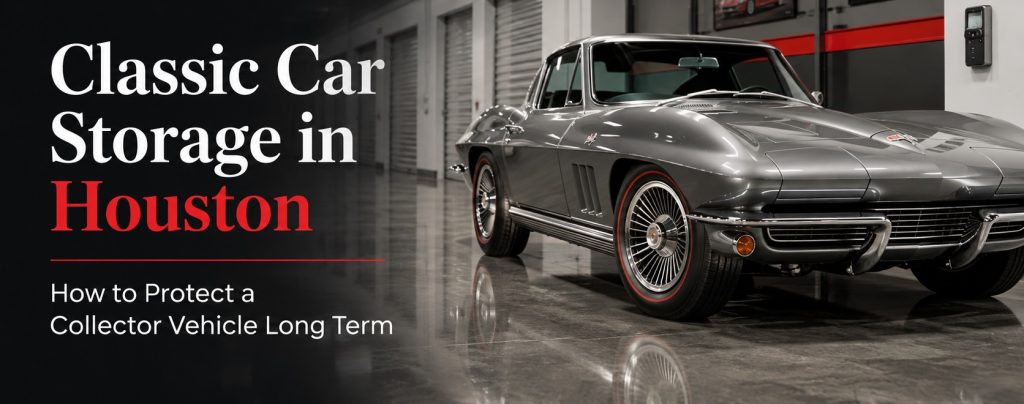
For owners of classic, exotic, and investment-quality automobiles, classic car storage in Houston should be treated as an active preservation plan rather than a parking arrangement. Houston heat, humidity, severe weather, and limited residential garage space make the quality of the storage environment especially important.
ALARA Garage was built around that need. Its climate-controlled car storage facility is located inside the Loop and combines controlled indoor storage with security, battery care, routine exterior attention, periodic vehicle movement, and concierge options.
Why Long-Term Collector Car Storage Requires More Than a Covered Space
A car cover can reduce dust. A residential garage can keep a vehicle out of direct rain. Neither automatically manages temperature, humidity, battery health, tire loading, monitoring, or emergency access. Those details matter more as the vehicle becomes rarer, more valuable, more mechanically complex, or more sensitive to cosmetic deterioration.
A strong luxury car storage plan considers the entire vehicle: paint, leather, rubber, electronics, tires, fluids, fuel system, battery, seals, and the owner’s ability to retrieve the car when needed. The goal is simple: when the door opens after weeks or months, the car should feel cared for, not merely untouched.
1. Climate Control Helps Stabilize the Storage Environment
Houston summers place vehicles in a challenging combination of heat and humidity. A climate-controlled indoor facility reduces exposure to extreme temperature swings and moisture compared with an outdoor space or a garage that tracks ambient conditions. Stability is particularly useful for interiors, finishes, adhesives, electrical connections, and older materials that may not tolerate repeated heat cycles gracefully.
Climate control does not mean a vehicle becomes maintenance-free. It creates a better baseline so the rest of the preservation routine can work under more predictable conditions.
2. Keep the Battery Maintained, Not Chronically Discharged
Modern collector cars can have alarms, computers, keyless-entry modules, clocks, memory functions, telematics, and other parasitic electrical loads. Older cars can also lose charge simply because they are driven infrequently. Letting a battery remain deeply discharged can shorten its useful life and leave the car unavailable when you want it.
A properly matched battery maintainer can keep a stored vehicle ready between drives. Interstate Batteries describes smart maintainers as suitable for extended vehicle storage, but the charger must match the battery chemistry and the vehicle manufacturer’s guidance. ALARA notes that stored cars are kept on a Battery Tender as part of its care routine.
3. Tire Pressure and Flat-Spot Prevention Matter
A stationary car places the same section of each tire under load for weeks at a time. Michelin notes that extended stationary storage can contribute to temporary or semi-permanent flat spotting and recommends keeping tires at the vehicle manufacturer’s specified pressure rather than overinflating them. Periodic movement can also change the contact patch.
ALARA states that stored vehicles are moved slightly twice a month to help reduce flat spotting. For very long storage periods, tire cradles or other manufacturer-approved strategies may also be appropriate. Valuable original tires, unusual wheel sizes, and low-profile performance tires deserve extra attention because replacement can be difficult or expensive.
4. Protect Paint Before the Car Sits
Storage is easier on clean paint than dirty paint. Bug residue, road film, brake dust, bird droppings, water spots, and contaminants can become harder to remove when they remain on a finish for a long time. Before an extended stay, the vehicle should be cleaned carefully and inspected for existing paint or trim concerns.
ALARA’s professional detailing partner offers high-end detailing, paint correction, paint protection film, dent removal, and surface-protection services. ALARA also states that stored cars receive weekly exterior cleaning, helping keep dust from becoming the default condition of the vehicle.
5. Do Not Ignore Small Mechanical Signals Before Storage
A small coolant seep, weak battery, aged tire, slow window motor, intermittent warning light, or fluid spot on the garage floor is easier to address before the car disappears into storage. A pre-storage inspection gives the owner a baseline and prevents a known problem from becoming an unwelcome surprise at retrieval.
For specialized vehicles, ALARA’s maintenance and repair partner works with luxury and exotic marques and provides repair, maintenance, performance work, inspections, alignment, and tire services. Any long-term storage plan should still follow the specific owner’s manual and service requirements for the vehicle.
6. Security Should Be Layered
Collector-car security is not one lock. It is a system of barriers, monitoring, access control, and accountability. ALARA describes its 150,000-square-foot facility as a concrete structure with secured doors, steel barricades, monitored alarms, and a multi-camera system that allows owners to view their vehicles remotely.
That kind of layered protection is especially relevant for vehicles that are difficult to replace, have publicly known provenance, or attract attention simply because of the model and specification.
7. Retrieval Readiness Is Part of Good Storage
The best storage experience should not create friction every time you want to drive. Ask how much notice is needed, whether the battery is maintained, whether tire pressures are checked, whether transportation can be arranged, and whether the car can be prepared before pickup.
ALARA offers concierge options that can have a vehicle ready on the owner’s schedule and can arrange delivery to a location or make the car available at the facility. For owners who travel frequently or keep several vehicles, that operational convenience can be as important as the square footage.
Long-Term Storage Checklist for a Classic or Exotic Car
| Area | Before Storage | During Storage / Before Retrieval |
| Battery | Test battery condition and confirm correct maintainer type. | Keep on an approved maintainer and verify readiness before pickup. |
| Tires | Set manufacturer-recommended pressures and inspect condition. | Monitor pressure and change the loaded contact area periodically. |
| Paint & trim | Wash, dry, decontaminate and correct sensitive finish issues. | Keep dust controlled and inspect for leaks or environmental marks. |
| Mechanical | Address warning lights, leaks, overdue service and fluid concerns. | Perform scheduled checks and follow manufacturer storage/service guidance. |
| Interior | Remove food, moisture sources and unnecessary personal items. | Maintain a stable environment and inspect leather, seals and trim. |
| Security | Document vehicle condition, keys, access permissions and emergency contacts. | Use monitored, limited-access storage and maintain owner communication. |
How Long Is “Long-Term” Car Storage?
There is no single cutoff. A car parked for three weeks can have a weak battery. A properly prepared vehicle can remain stored for months. The more useful approach is to increase the level of preparation as the interval between drives grows.
If the car is staying for a season or longer, ask the service professional whether the fuel system, fluids, seals, tire loading, battery strategy, convertible top, air suspension, hybrid system, or other model-specific components require special procedures. Exotic and classic vehicles vary too much for one universal storage recipe.
What to Look for in a Houston Collector-Car Storage Facility
Climate-controlled indoor space: reduces exposure to Houston heat, humidity, rain, sunlight, and weather swings.
Layered security: monitored alarms, controlled access, physical barriers, cameras, and documented procedures.
Battery care: an appropriate maintainer strategy rather than waiting for a no-start condition.
Tire management: correct pressure plus periodic movement or another plan for long stationary intervals.
Vehicle-condition care: routine observation so a leak, low tire, or cosmetic issue is noticed early.
Detailing and maintenance access: the ability to correct mechanical or cosmetic concerns without moving the car through multiple vendors.
Concierge and transport options: practical retrieval and delivery when the owner is ready to drive.
Make Storage Part of the Ownership Experience
A collector car deserves a storage plan that protects the reason you bought it in the first place: the design, the driving experience, the provenance, and the condition. Good storage reduces avoidable deterioration while making the car easier to enjoy when the opportunity to drive arrives.
Owners looking for classic car storage in Houston can review ALARA’s storage program, browse the vehicle gallery, or contact ALARA Garage to discuss rates, availability, and concierge options.
Frequently Asked Questions
Is climate-controlled storage worth it for a classic car in Houston?
For valuable, rare, or condition-sensitive vehicles, climate-controlled indoor storage can provide a more stable environment than outdoor parking or a garage that follows Houston’s heat and humidity. It should still be paired with battery, tire, security, and maintenance planning.
Should a stored collector car be started regularly?
There is no universal schedule for every classic or exotic vehicle. Follow the manufacturer’s guidance and the advice of a qualified technician who knows the car. Brief idling may not provide the same benefit as a proper operating cycle, so the storage routine should be vehicle-specific. ALARA publishes its own care process for vehicles stored at its facility.
How can I reduce tire flat spotting while my car is stored?
Keep tires at the vehicle manufacturer’s recommended pressure, monitor them during storage, and change the loaded contact area periodically when appropriate. Michelin also advises against overinflating a stored vehicle simply to prevent flat spots. Tire cradles or other solutions may be useful for longer storage depending on the vehicle and tire.